Uncategorized
Good Friday Walk 2023
Churches around Malhamdale organised again this year “A Walk in the Dale”. As it was last year about 35 people from around Airton joined in for parts of the route (and about 25 did the whole circuit). Avoiding the Good Friday traffic and spent a great day outdoors, with opportunities to talk, reflect and look to the coming year, and perhaps to see something different.
The group left Gargrave at around 9 am and arrive at Airton Meeting House around 11 am for refreshments and a short talk about the historic Meeting House by our Clerk, Wilf Fenten was informative. Some of Airton Friends joined them at this point on the walk, and others were in the Barn preparing for their arrival in Airton and provided tea, coffee, juice, biscuits and cake. Anyone who did not want to walk but to have have a closer look at Airton Meeting House were also welcomed with refreshment.
A big thank you to Sue McWhinney from St Michael the Archangel Church in Kirby Malham and husband Paul for their organisation and ongoing support throughout the event. A link to Sue’s post online below
Good Friday marked by mini Dales pilgrimage to three churches
First published on: 8th April 2023
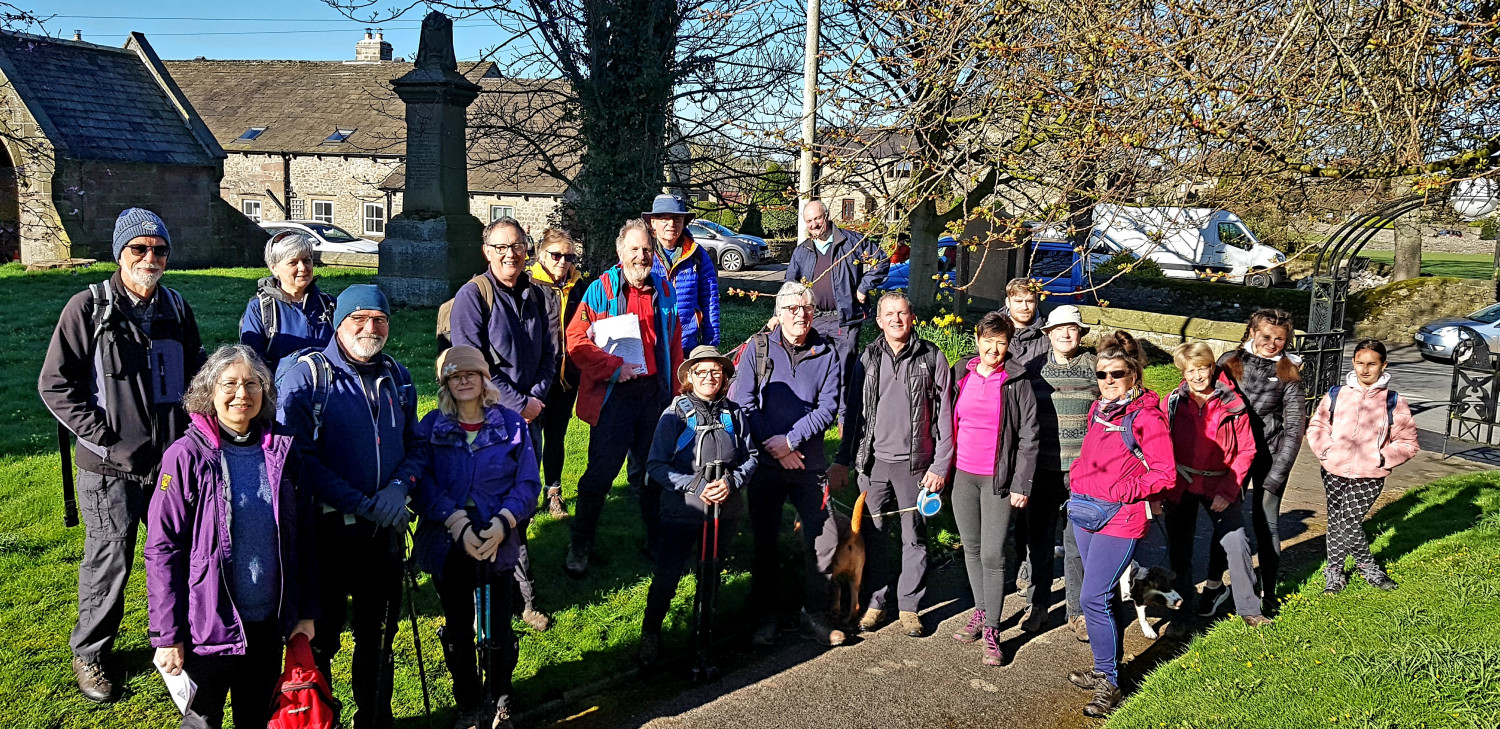 Good Friday was marked by a mini pilgrimage through stunning Dales scenery by walkers from the churches of Gargrave, Coniston Cold and Kirkby Malham.
Some 30 ramblers took part in the 14 mile circular hike from St Andrew’s, Gargrave, along the Pennine Way to St Michael’s, Kirkby Malham and then looped back via St Peter’s, Coniston Cold.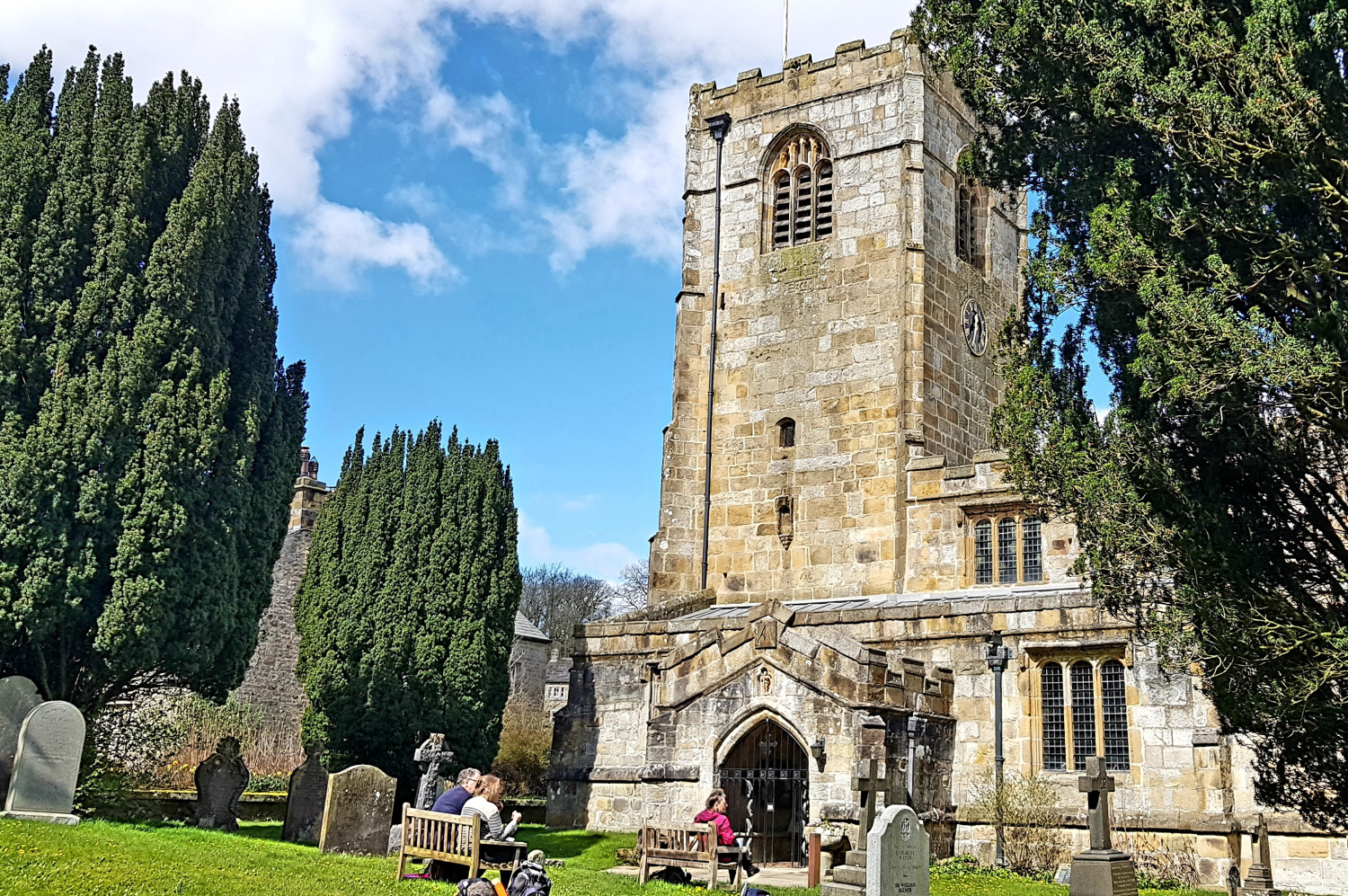
Welcome refreshments en route, including hot cross buns, were provided at the 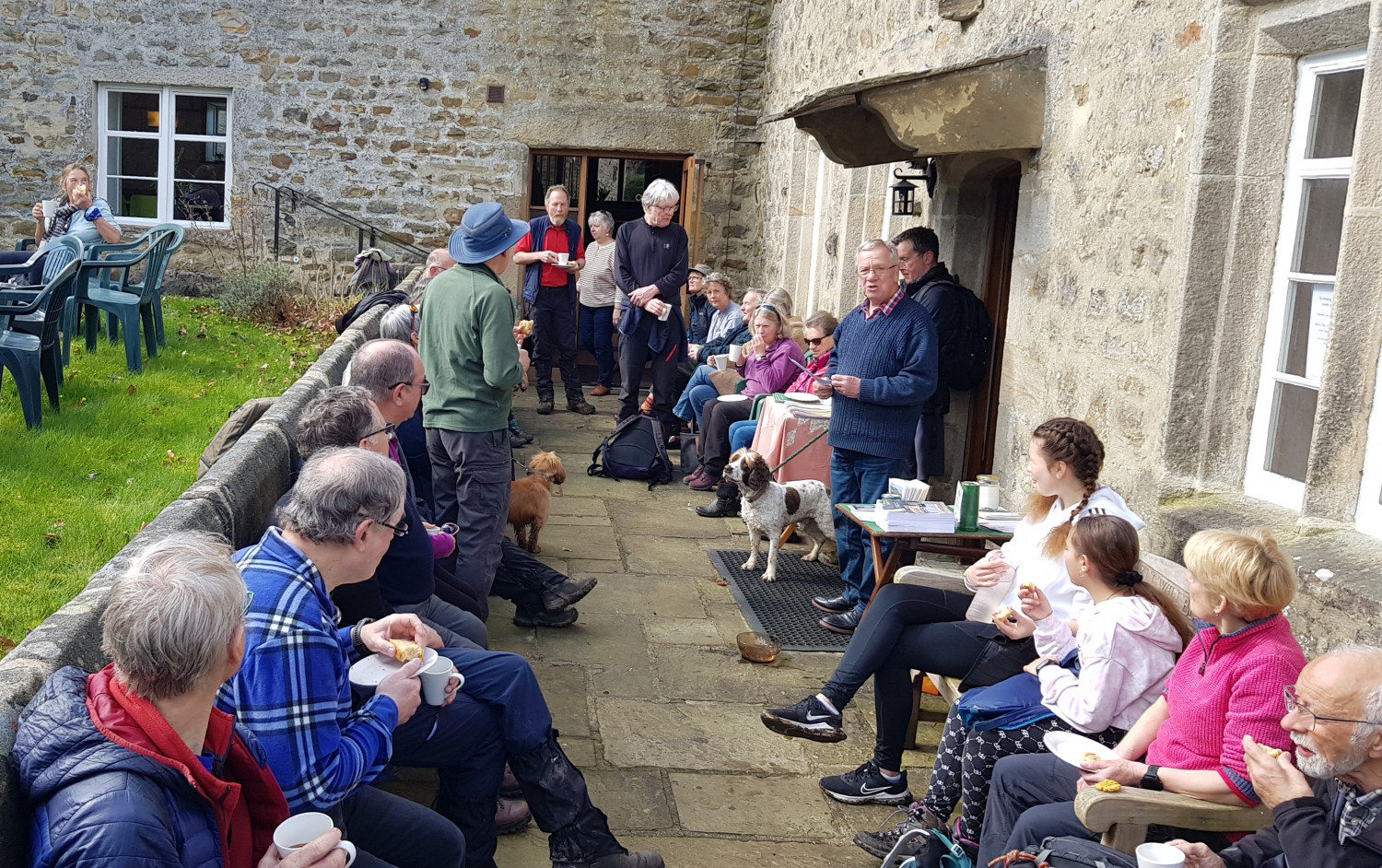 Friends Meeting House, Airton, where member Wilf Fenten gave a talk and tour of one of the oldest Quaker buildings in the country.
Tea was served at St Michael’s before a steep climb out of Kirkby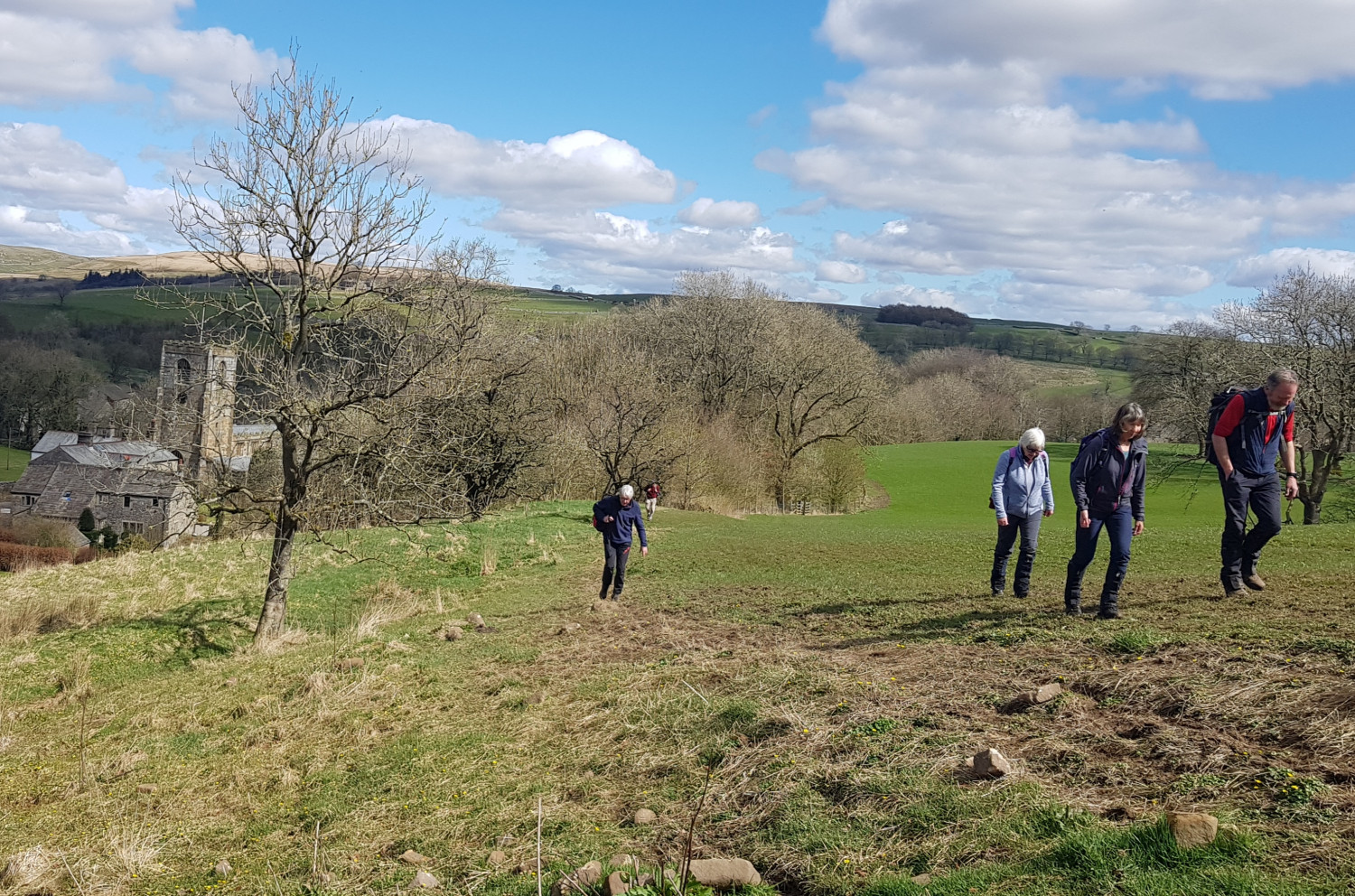 Malham and on to St Peter’s for a rest and more buns at Coniston Cold village hall before the last leg back to Gargrave.
Revd Sue McWhinney, who organised the walk with her husband Paul, said the circular Easter walk may become a fixture: “It’s been a wonderful day visiting beautiful churches in beautiful places and calling into the Meeting House also made it an ecumenical event.
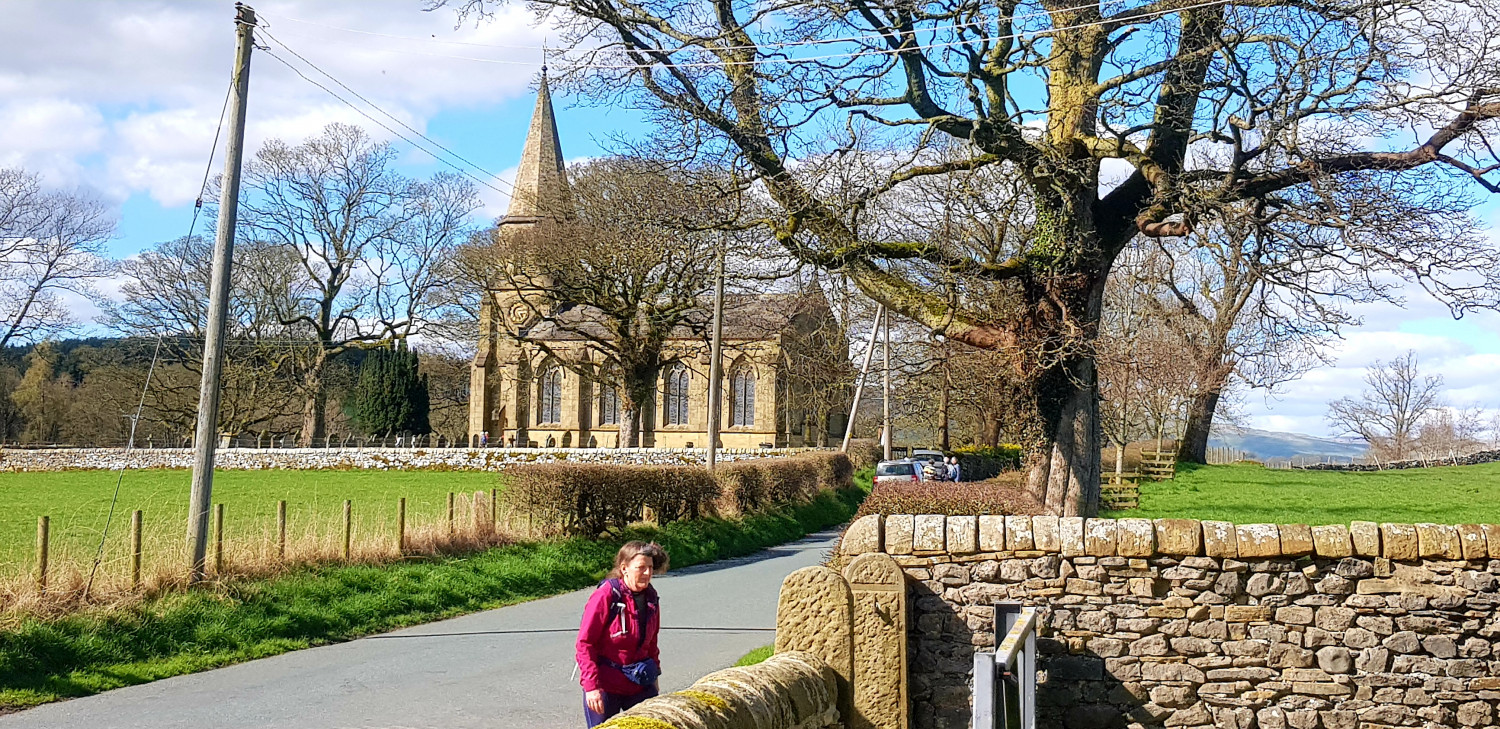 “It was the second Good Friday that we’ve done this walk and it would be great to do it every year.”
A map of the walk and directions to download
We Are Open – looking forward to welcoming you to stay 2023 in our refreshed Bunk barn!
This historic Quaker meeting house and accommodation is back open for business!
MARCH 7TH 2023 AIRTON BARN
After being closed for nearly 3 years due to the COVID-19 pandemic, Airton Barn is reopening its doors on April 1st, and it’s an exciting moment for travellers and backpackers alike. This hostel, located in the beautiful village of Airton in North Yorkshire, England, has been a popular destination for budget travellers for many years. What makes this hostel even more special is that it is run by the Quakers who are known for their commitment to social justice and community service. The historic Friends Meeting House on site has been used by Quakers since the mid-17th century, being located in the region known by Quakers as ‘1652 Country’.
Airton Barn is not just any hostel; it’s an ethical hostel that provides rest for travellers while promoting sustainable tourism practices. Airton Barn is committed to creating a safe, welcoming, and inclusive space for all guests, regardless of their background, ethnicity, or religion.
A historic venue in its own right, Airton Friends Meeting House has a fascinating story to tell about the origins of Quakerism in this region. With so many other ancient religious sites in the area, the Barn makes an ideal base for pilgrimages and journeys of architectural discovery. They host retreats of various kinds, faith-based or otherwise, as well as creative courses and workshops.
One of the great things about Airton Barn is that it’s located in an area of outstanding natural beauty. The village of Airton is situated in the heart of the Yorkshire Dales National Park, and it’s a perfect base for exploring the area. Guests can enjoy hiking, cycling, and other outdoor activities while admiring the stunning scenery of the Dales. The hostel is also within easy reach of several historic sites, including Bolton Abbey and Skipton Castle.
Overall, the reopening of Airton Barn is an exciting moment for travellers who are looking for a unique and ethical place to stay. So, whether you’re a backpacker, a solo traveller, or a family looking for an affordable and ethical accommodation, Airton Barn should be added to your 2023 bucket list.
Entry written in the Natter – Independent Hostels Association
Meadow making the low-tech way

It’s year two of the big biodiversity push in the burial ground, conceived as a strip of meadow grass around two edges. Advice about establishing meadows is as diverse as the list of flowers that you might find in a well-managed sward but the underlying principles are always the same, always based on what is going on ecologically speaking. Crucially, managing a meadow for diversity is all about reducing the dominance of coarse grasses and broadleaved weeds so that more tender herbaceous plants get a chance to shine. And possibly counter-intuitively, the more fertile the soil, the harder that is.
Last year, we planted plugs of Primroses, Red Campion and Ragged Robin – mainly because those were the wildflowers people had growing in their own gardens than for scientific reasons. After flowering I collected seed from the Campions and scattered it throughout the strip – to little effect, as only one campion flower was spotted this year. But the Primroses were out in force in the spring and more recently Ragged Robin has graced a number of areas. This year we’ve plug-planted Foxgloves and Teasels; come autumn I’ll sow Yellow Rattle to weaken the grasses and make space for more flowers.
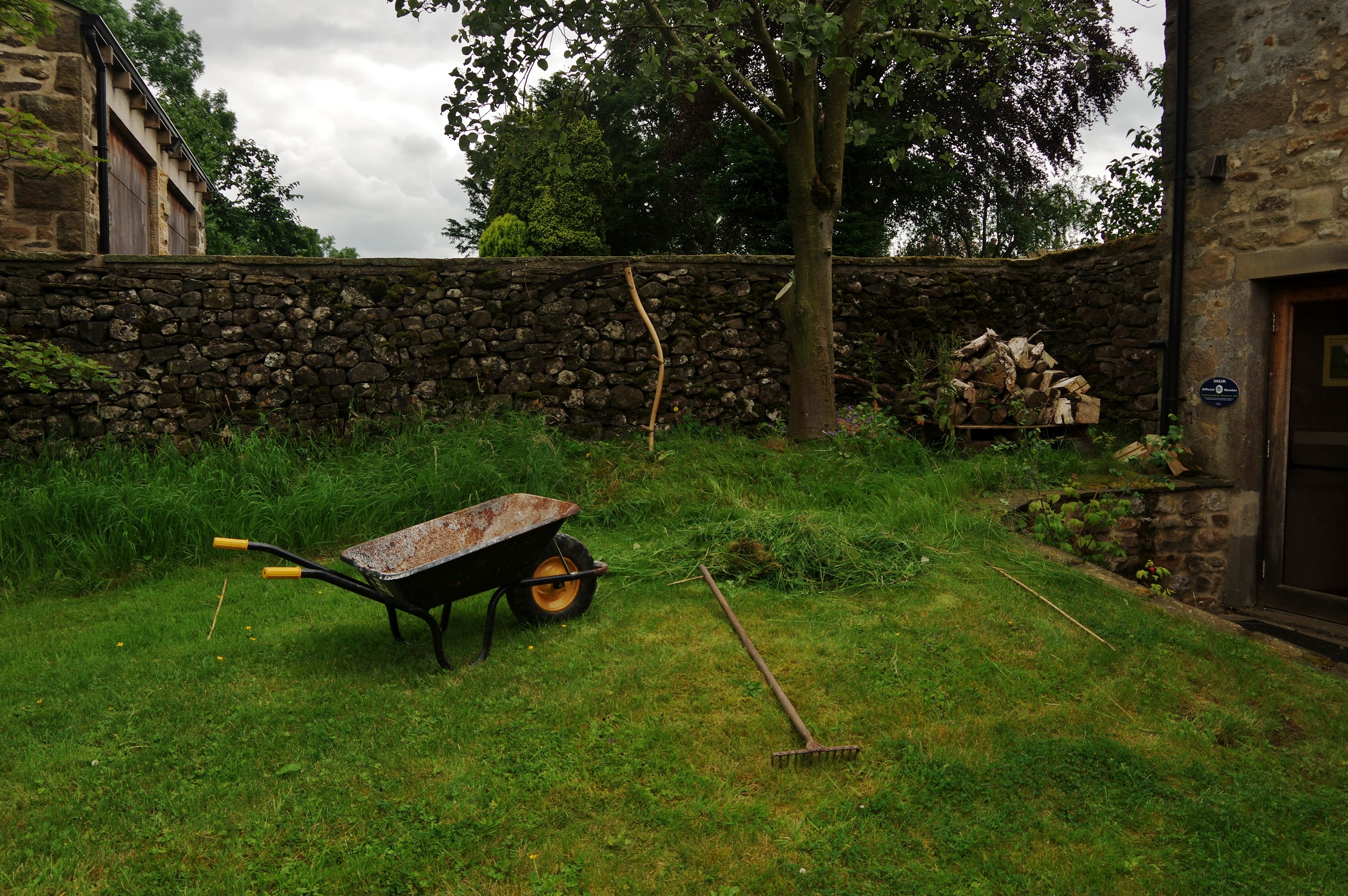
This is all a bit of an experiment and one important variable is the timing and number of cuts. The time of the first cut of the year determines what plants can grow to maturity – earlier cuts meaning that spring flowers are promoted whilst summer flowering plants are excluded. We’re interested in establishing a diverse sward that peaks in mid-summer, so July is the earliest cut. The factor that governs the rest of the year is a deeply practical one: I’m using a scythe and as a novice am rather slow about it, so a couple of cuts per year is about all I can spare time for. The second cut, made at some point in late summer, is the last bit of attention the meadow will get before winter closes in.
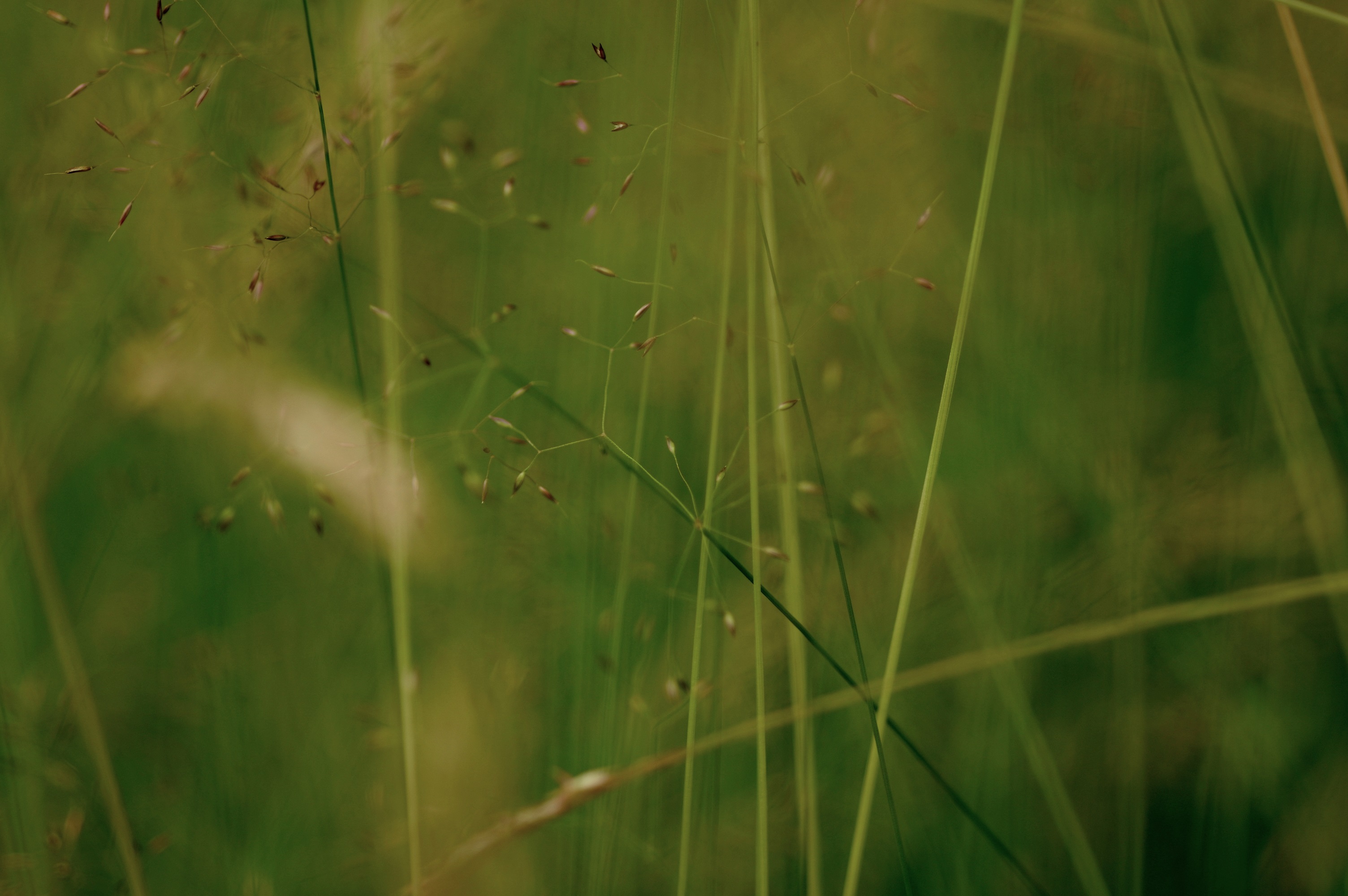
It may not be scientific but what emerges over time will be of interest in and of itself. As things stand, the grasses are still thick and strong, mining what is clearly a richly fertile soil – so in the long run we may be on a hiding to not very much. However, this is an easy disappointment to bear, if indeed one at all. For the grasses themselves, now in full flower, make a beautiful backdrop of their own to the burial ground: a tapestry of stalks and fronds in all heights and textures. Quite unlike the lowly green carpet their neighbours in the lawn are kept to, their different personalities are expressed in all their glory. My particular favourite is the smallest – a delicate tracery of seed heads frothing through the border like a murmuration of tiny starlings, Common Bent (Agrostis capillaris) is much prettier than its name suggests.

Then there’s the soft, flouncy heads of the Yorkshire Fog (Holcus lanatus) and the rough sawtoothed Ryegrass (Lolium perenne), the bottle brushes of Timothy (Phleum pratense) and the graceful arching heads of Hairgrass (Deschampsia sp.)
But for me it’s the action of scything itself that is its own reward. There’s something tranquilising, even peaceable, about the rhythmic swinging of the blade, as the weight of the snath (the main length of the scythe) draw it firmly and – with practice – evenly through the sward. The feel and sound of the stroke, combined with the sense of bodily rhythm and control are themselves a meditation; the gradual, transformative progress through space lends purpose and satisfaction to the task. This is not an activity to be carried out in haste or anger – rather, with patience, concentration and a still mind. Tiring it may be but no sooner have I put the scythe away I’m looking forward to the late summer cut, when it’s year’s work will be completed.
The peace for which we all struggle
In this centenary year of remembrance I had intended to create an impressive display of poppies grown on a patch of recently disturbed ground in the Meeting House gardens but for whatever reason they failed to appear. Perhaps the seeds I scattered in the summer’s dry earth fell prey to birds and beasts before they had the chance to germinate. Still, a handful that had grown up in one border persisted later than expected, almost to remembrance day itself, still blooming in late October.
Earlier this year a request by the mayor of Skipton to permit the inclusion of white poppies in the remembrance wreath to be laid this week was rejected by the town council’s finance and policy committee. Using words such as ‘shocking’, ‘disrespectful’ and ‘pseudo-populist rubbish’, the committee’s Councillors blocked the mayor’s proposed gesture, intended in his words to recall the celebration of peace rather than victory at the end of the first world war.
As controversies go, differences of opinion about which poppy is appropriate to wear seems both tiresomely regular and, in my view, wholly unnecessary. Created respectively in 1921 and 1933, the red and white poppies simply symbolise different aspects of remembrance – the first, honouring the courage and sacrifice of combatants; the second recalling all victims of war and calling for a culture of peace. Each achieve further practical goals, the sale of the British Legion’s red poppies funding support for injured veterans and the families of military casualties, whilst the white funds the Peace Pledge Union’s promotion of ‘non-violent approaches to conflict and challenging militarism’.

These goals need not be mutually exclusive. Whilst it’s true that by the 1930’s the originators of the white poppy, the Women’s Co-operative Guild, felt that the red had become associated with a growing militarisation of Remembrance events rather than a symbol of peace, 80 years on the context in which we remember both the 1914-18 war and all subsequent conflicts has altered radically, calling for and de facto resulting in new understandings and perspectives on what remembrance can mean. On the one hand, historic detachment from the events of a century ago makes it easy to forget the intentions of those who devised the first acts of remembrance – who constructed what they termed ‘peace memorials’, not war memorials as later re-expressed. On the other, the diversity of our present-day society, the growing depth of experience in non-violence and peace-building and conversely the support for arms exports by governments as a key component of our economy, mean that there must be room for acts of remembrance challenging political orthodoxies that lead to bloodshed, whether suffered by combatants or civilians.
Many people, myself included, want to support both causes – help for those who have made bitter sacrifices on our behalf; and challenge to the validity of the political decisions that placed them in harm’s way. But this is also not the only possible perspective. Whether one or more poppies are worn is an act of individual conscience and the decision to wear the red in particular is a gesture of charity. To make either a matter of uniform is to remove volition and ultimately the value of this gesture. Further, a refusal to accept the validity of this choice undermines the very freedoms that those who struggle through war, in whatever capacity, believed they were fighting for. Finally, to condemn another person’s means of honouring the dead of war as ‘disrespectful’, hence refusing to afford that person and any holding a different view to one’s own the same dignity claimed for another group, could itself be considered disrespectful in the extreme.
If we are unable to cope with the presentation of two colours of poppy in a wreath intended to express the response of our whole society to the losses incurred in war then the gesture is an impoverished one, sad, monochrome and unrepresentative of who we are and of what modern Britain has always been: democratic, politically diverse and above all a country in which alternative expressions are not only tolerated but celebrated.

Of Nettles, Cottongrass and Orchids
I’ve been waiting for the right time to explore Pendle Hill – that charismatic whale-back commanding the western horizon in views from pretty much everywhere skirting the south-western foothills of the Dales. An inspiration to George Fox as it was (see my previous blog, November 27th 2016), perhaps climbing it will spark a few more modest thoughts of my own.
In the middle of a heat wave the outlook is likely to be hazy but with overnight rains I’m hopeful that the air will have cleared and I’ll have a good view back towards Settle Moor and the hills east of Malhamdale. Starting from the cheerful village of Barley I soon pick up the well-signed Pendle Way and begin what becomes before long a relentless ascent. The early stages are marked by appealing encounters with gnarled, hollowed out ash trees, well-kept cottage gardens and I even find a patch of Nettles in full flower attractive. Well, if you ignore the stings it’s quite a pretty plant really – and useful!
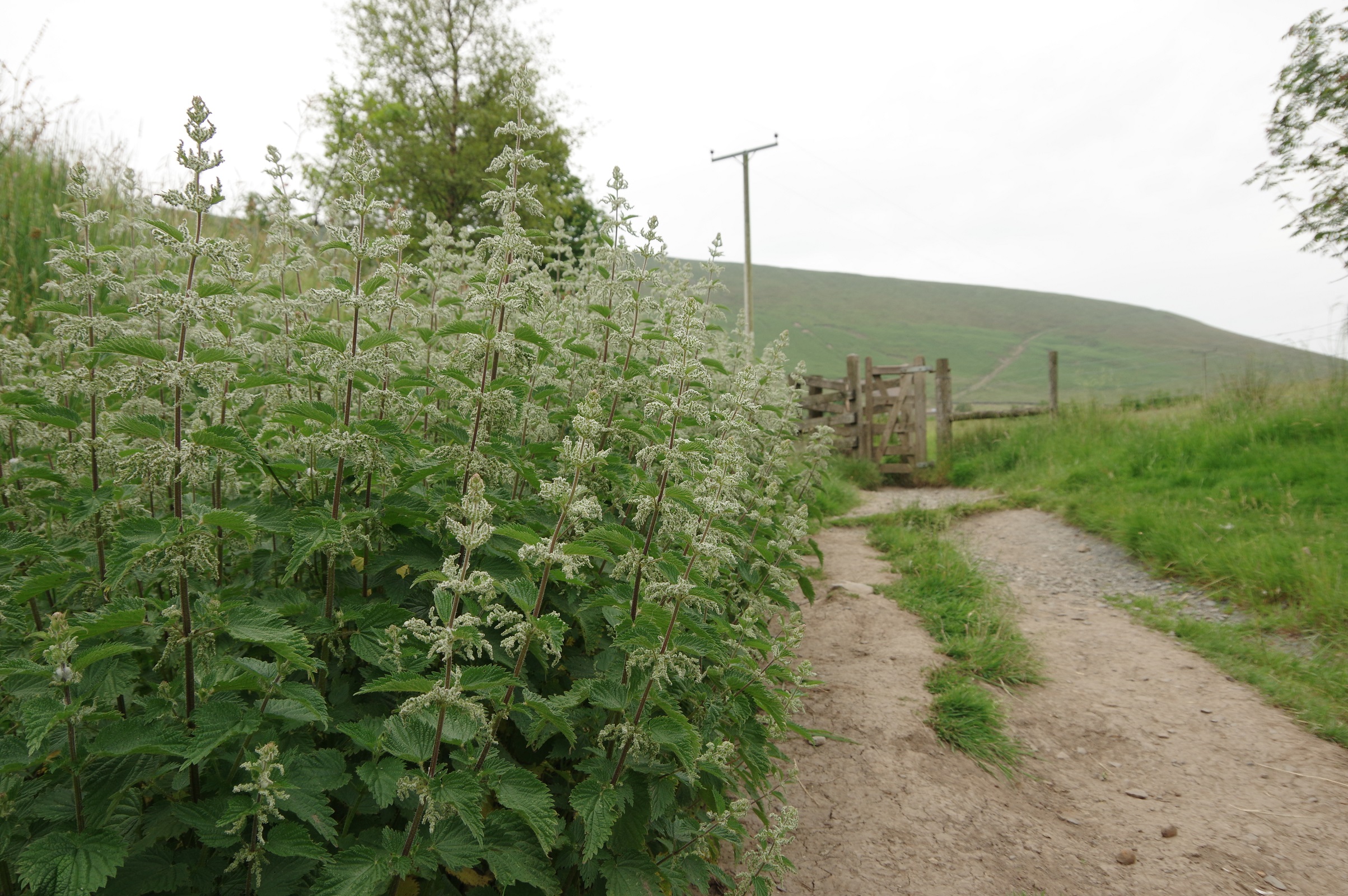
Hills and the views from them are irresistible if hackneyed metaphors. Nonetheless the logic works: amongst the many reasons for climbing a hill is to achieve a sense of more than physical distance from the humdrum tangle of everyday matters and their accompanying controversies; to see the bigger picture internally just as the external view unfolds in all its glory. However, my hopes of a clear view soon dissipate: far from clearing the air, the rain was just the vanguard of a blanket of cloud washing out everything further than a couple miles away from sight.
Just as the weather foils my attempt to look back towards home it provides an equally significant metaphor to the hoped-for sense of clarity: although I might not be able to see the whole picture as clearly as I wished but I can at least see what it is that’s blocking the view; and to decide whether it’s possible to sweep it away, or whether there’s nothing for it but to sit it out and wait for the prevailing wind to disperse it.
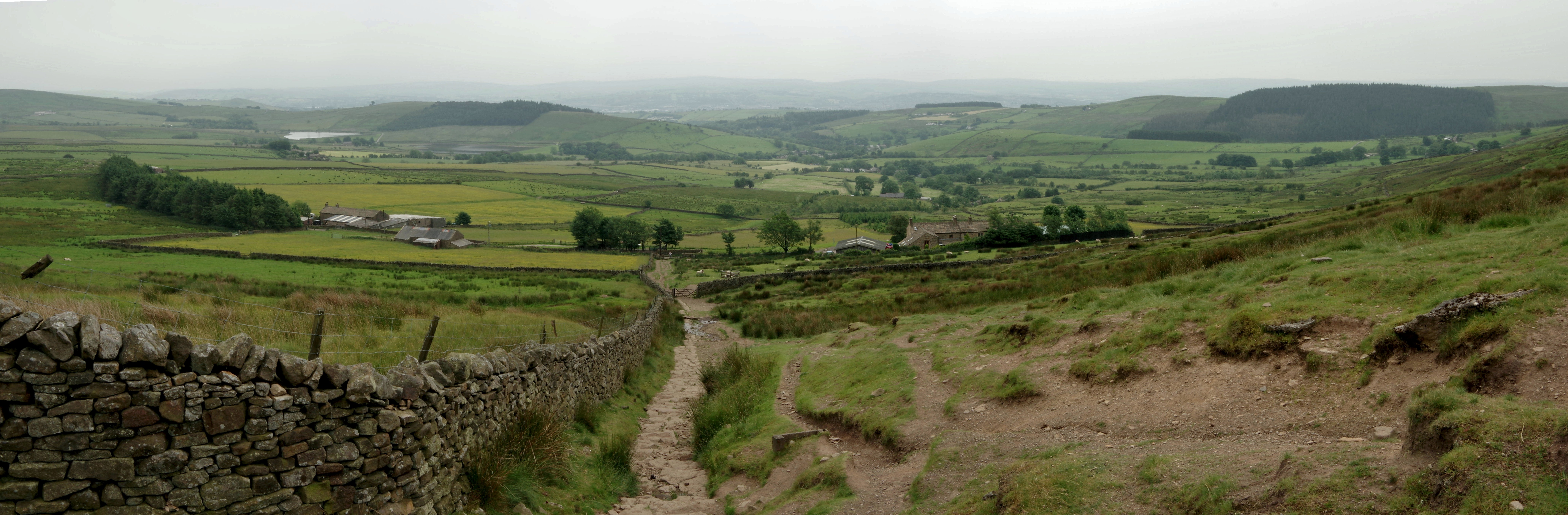
Up here on the summit of Pendle, it’s not only my own challenges that come to mind when I’m looking for clarity. It seems to me the current state of the country is no less cloudy than this view. It would be enough that we are faced with the biggest political, economic and legislative upheavals in several generations in the form of our exit from the EU, profound questions over how our role in world affairs should be played and fractious, wavering governance at home; but the terror and cyber-attacks of recent weeks, the deplorable tragedy of Grenfell Tower and the reports of failing public services all serve to disorientate and prevent objective assessment of how we should be as a society in 2017. I’m reminded of a slogan deployed optimistically by a certain political party during the 2010 election: ‘We need to heal our broken society’. I wonder how that’s going?
I have no answers of course; but about the current state of politics I do wonder what might happen if, given the divisive nature of the ideologies behind each party’s approach, instead of any one party attempting to represent the whole country’s aspirations in the uniquely challenging task of Brexit, the government were formed of ministers from every party in parliament? Forced by the need to overcome differences in the national interest those involved might be led to search for a sense of how best to proceed rather than constantly fighting their predetermined corners in a rearguard action against hostile opposition at home and abroad. I know this isn’t the cricket we’re used to in UK politics but Quakers can vouch for non-confrontational business methods to resolve the most controversial of subjects; and yes, we do occasionally encounter some very interesting controversies even within what is in essence a highly progressive movement.
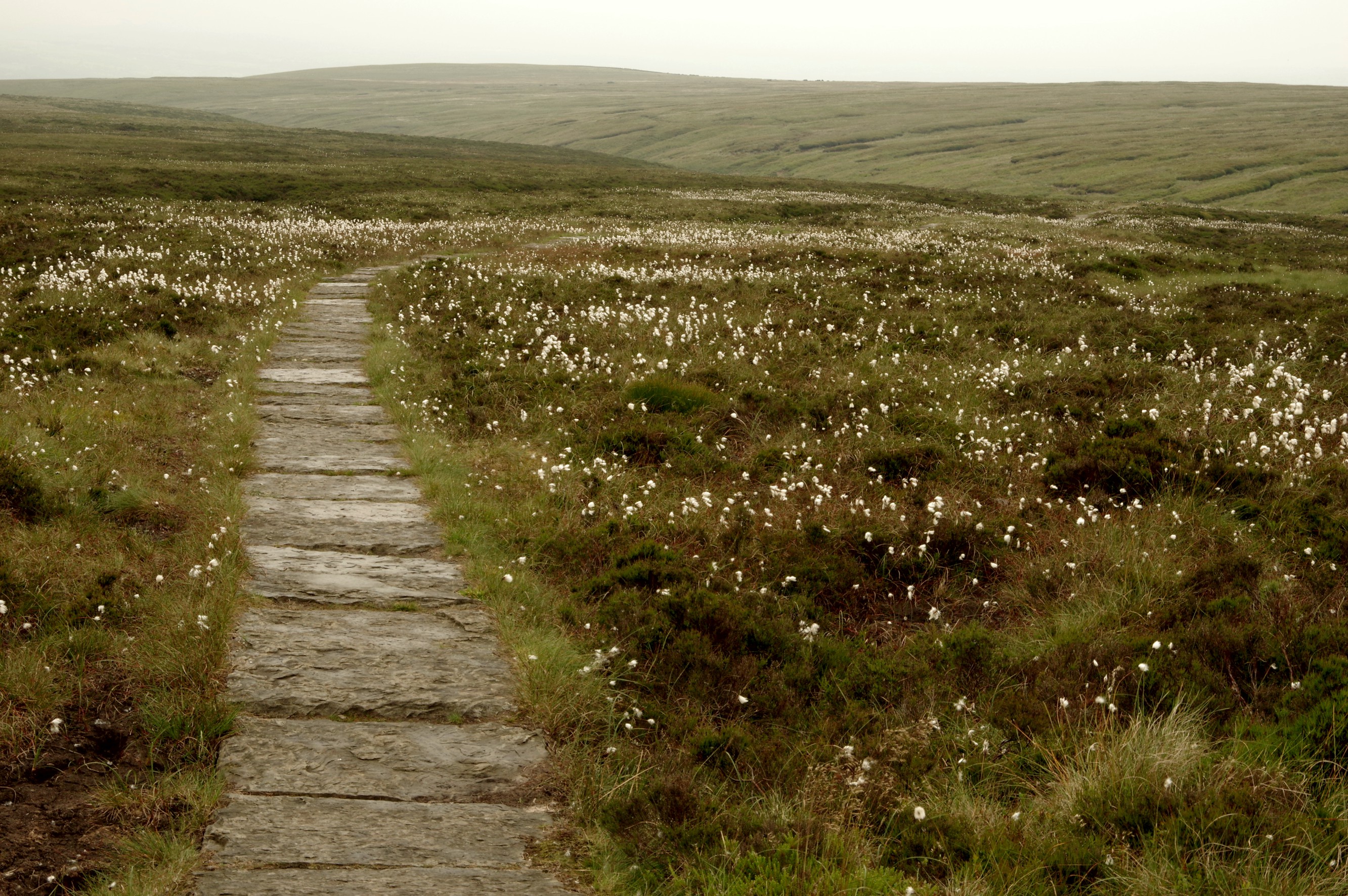
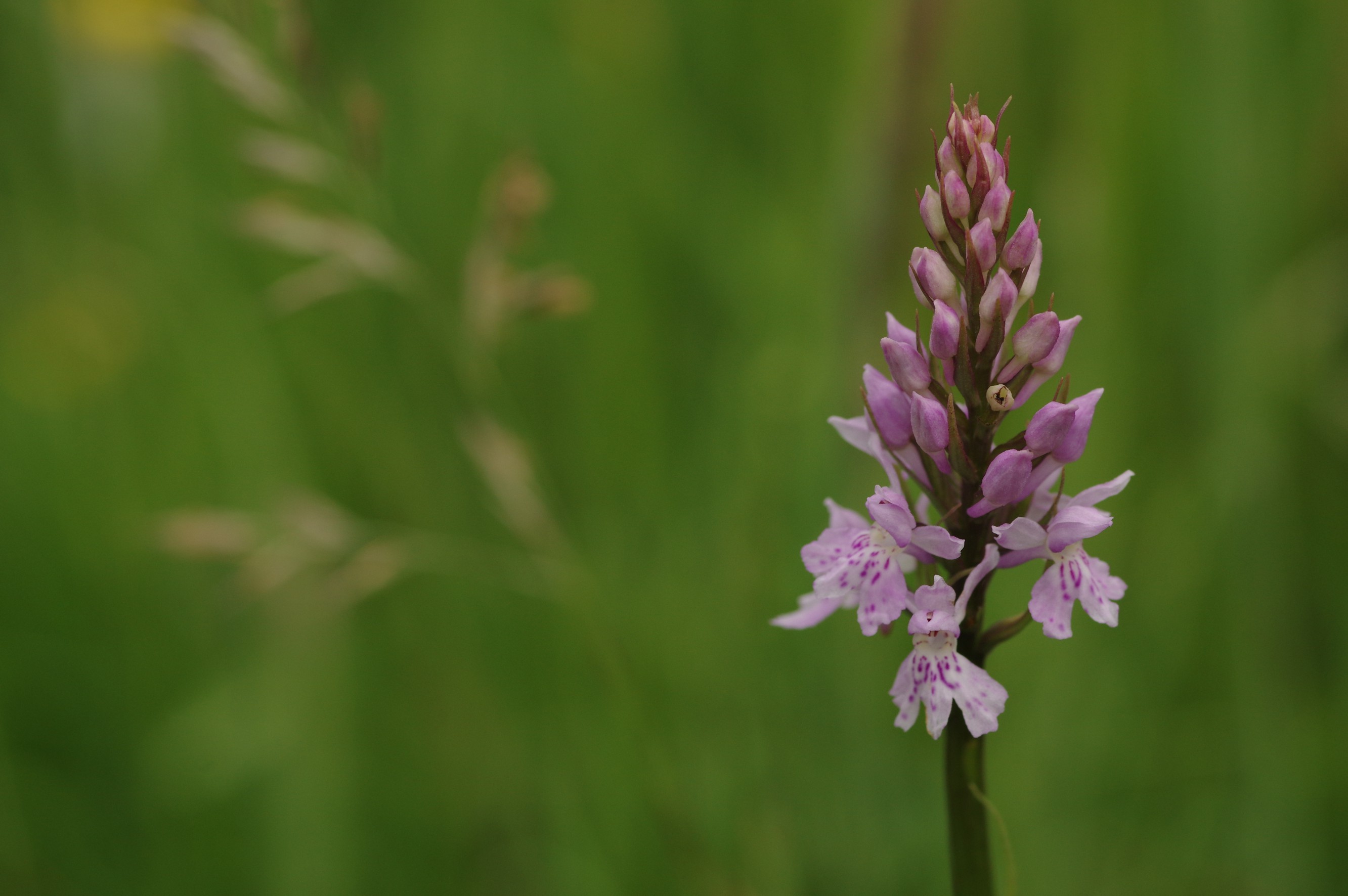
Such are my less than conclusive thoughts as I leave the summit, following by whim an inviting flagged path winding down the back of the hill between endless stretches of cotton-grass. Now there’s one of my favourite things: for some reason, cotton-grass really cheers me up. In fact it’s up there with halloumi cheese, Chopin’s piano concerto in E minor and Edinburgh. And I might have gone on thinking that was the best result I could have hoped for from this walk on a dreach day until lower down in the valley I come across a swathe of exquisite orchids dotted about in a fabulous meadow. It really was worth the trip just for that. After all, looking closely at the details is just as valuable as seeing the bigger picture – there being, of course, a right time for both.
- ← Previous
- 1
- 2
- 3
- Next →
 Airton Friends' Meeting House and Barn